
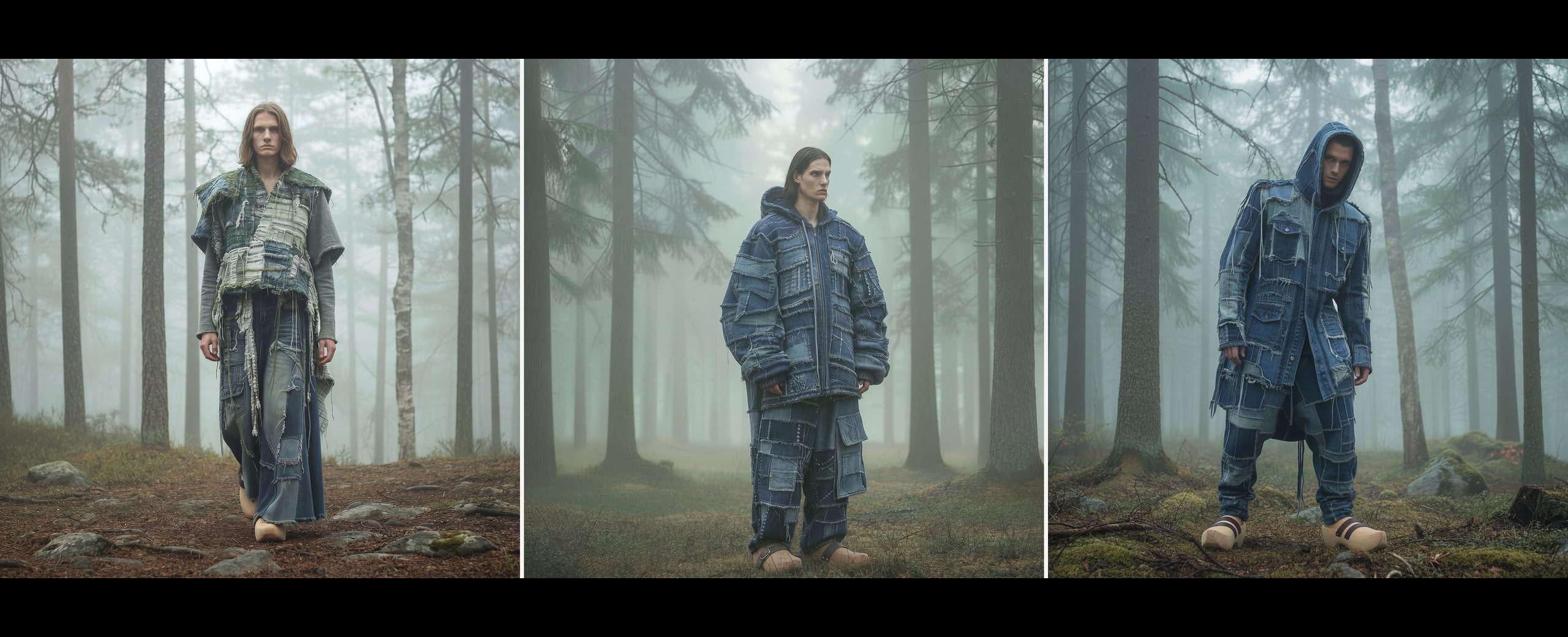
Design Forward is The Fabricant's annual AI fashion design competition, open to the next generation of fashion creatives working with AI design tools. In 2026, a nine-member international jury selected ten winners from fifteen finalists across a truly global field — from Kuala Lumpur to Kolding, Bangalore to Lisbon — with first place going to Reborn Myths by Tiia Jaakkola of Kolding School of Design, Denmark.
The jury's deliberations kept returning to one question: is AI's value in fashion about creating entirely new things, or about renewing and reimagining what already exists? Both approaches produced compelling results. The strongest submissions were the ones where the designer's point of view came through clearly, and where the use of AI served that perspective rather than replaced it.
"AI is becoming a big equalizer of creativity and of talent."
Adriana Pereira — Co-Founder, The Fabricant
A student in Kuala Lumpur, a graduate in London, a designer in Milan, a young talent in Bangalore — each had access to the same creative tools and the same expressive possibilities. The range of finalists included emerging designers from traditional fashion capitals and from entirely new destinations. That shift matters.
Reborn Myths by Tiia Jaakkola, Kolding School of Design, Denmark.
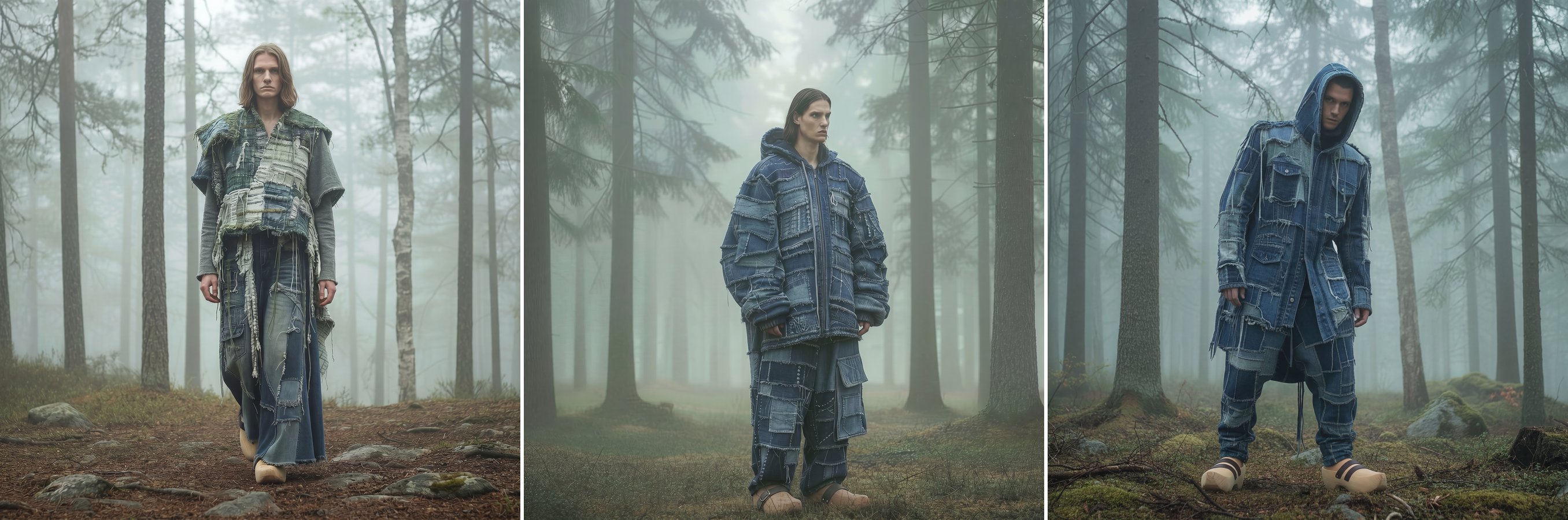
Reborn Myths arrived as one of the most cohesive submissions the jury had seen across all fifteen finalists. One material. One mood. One palette. One location. One story. That level of creative discipline is rare — and it showed.
The collection transforms post-consumer denim waste through the lens of Finnish folklore and contemporary streetwear. The cultural grounding in mythology and folk narratives gave the work a clear sense of identity that carried through every look. The jury could immediately picture it worn in real street contexts — a sign of both commercial awareness and creative conviction.
What made Reborn Myths stand apart was the tension between materials. The physical, hand-crafted quality of the denim patchwork set against the AI-generated finish created something the jury described as striking and beautiful. The construction — how the denim folds, pleats, and takes shape — impressed jury members with materials backgrounds.
Tiia used 339 credits and engaged with nearly every tool available on the platform — more than any other participant. The jury saw the effort in the result.
Invisible Architecture by Akriti Awatwani, Instituto Marangoni, Italy.
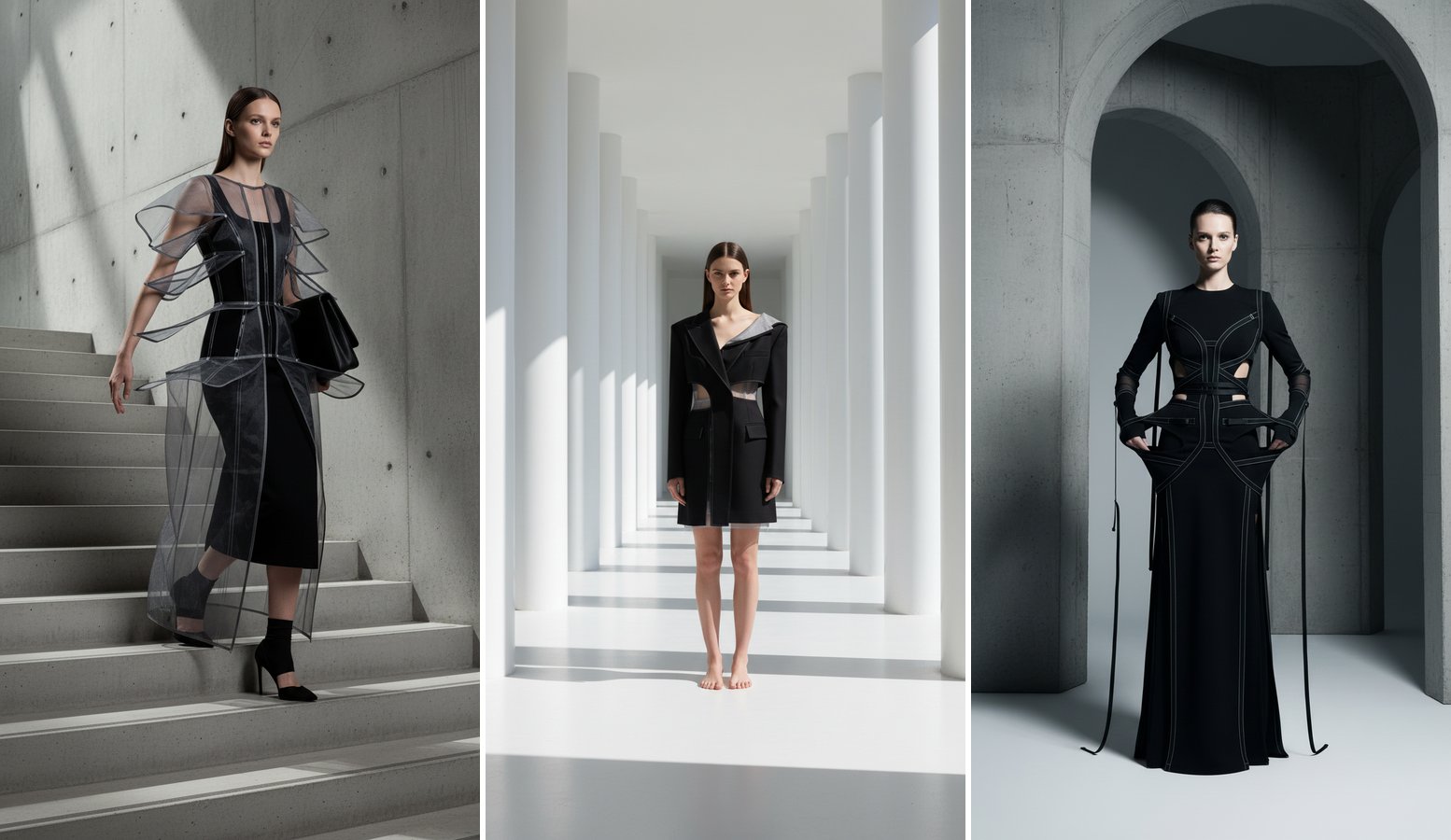
Invisible Architecture used AI to explore structure, negative space, and the tension between what is present and what is absent in a garment. The concept carried consistently across all three looks — a clear thesis, a well-designed presentation, and commercial legibility that the jury recognised immediately, especially in the first look.
The jury described Akriti's presentation as one of the most cohesive and well-structured of all fifteen finalists. The tailoring approach was seen as on-trend, and the focus on clean silhouettes and visible construction showed real design discipline. Every technique proposed is achievable — the collection is genuinely producible.
One jury member noted that staying grounded in realism rather than pushing into visual extremes was itself a sign of control over the tools. That restraint is a skill. The aesthetic feels considered and intentional throughout.
Streetwear Preppy by Andre Fonseca Vieira, Faculty of Architecture, University of Lisbon, Portugal.
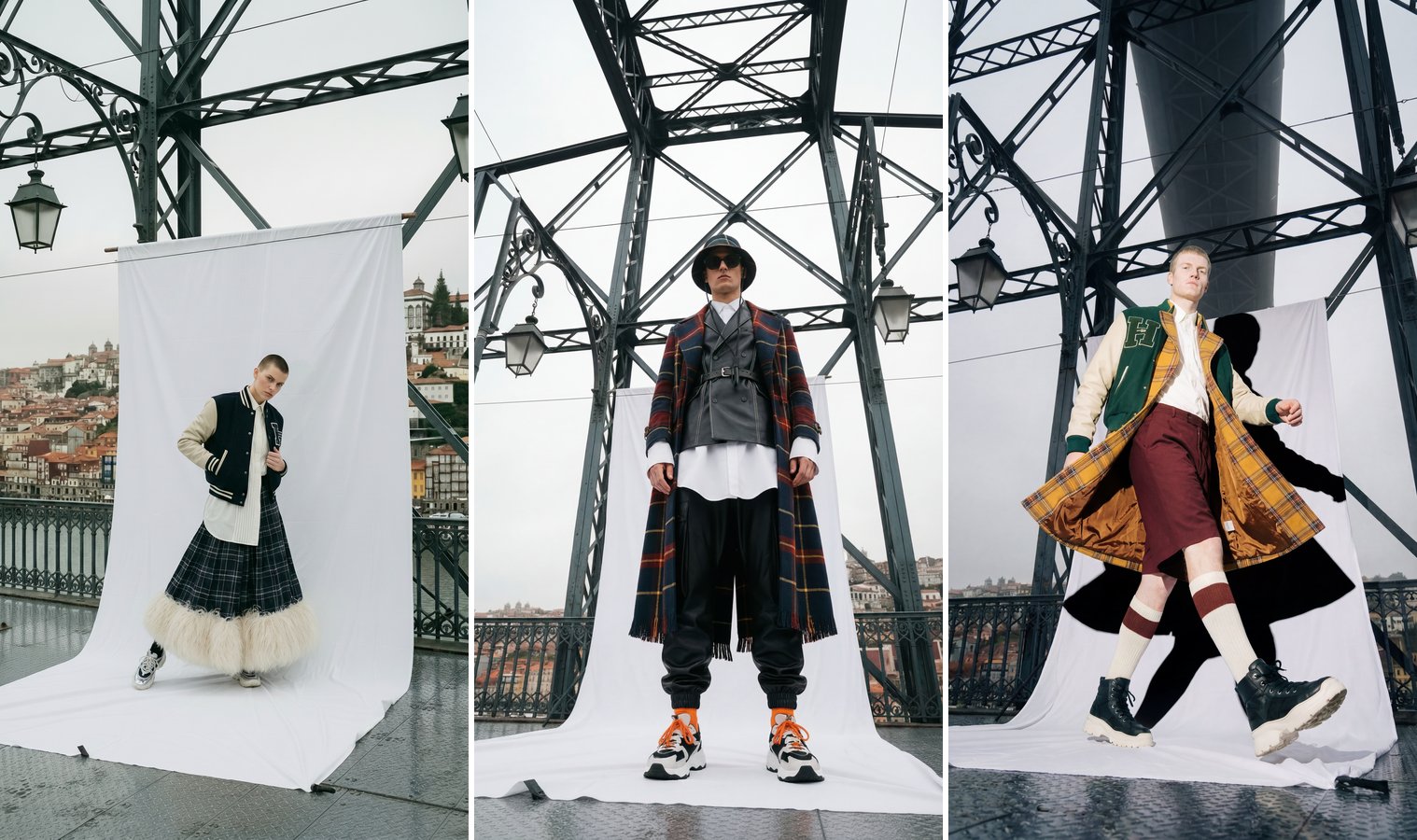
Andre Fonseca Vieira took a familiar aesthetic and recontextualised it with discipline and commercial clarity. Streetwear Preppy reads as a real editorial shoot — several jury members noted that the images felt publishable. That level of visual credibility is not easy to achieve, and not every participant gets there.
The use of different lighting effects across the looks demonstrated genuine awareness of how fashion photography works. Market awareness was rated high: the jury agreed there is a clear, real audience for what Andre created. The silhouettes are grounded in reality, and the collection is genuinely producible.
Coming from the Faculty of Architecture at the University of Lisbon, Andre brought a structural eye to a commercial category — and the result showed.
Beyond the top three, seven more collections earned a place in the Design Forward 2026 final. Together, these ten represent the breadth of what this generation of designers is doing with AI tools — from sustainability and cultural identity to football culture, knitwear innovation, and entirely new visual worlds.
Nine industry figures evaluated the finalists across originality, cohesion, producibility, and market awareness. Their debates shaped the outcome.
The most significant pattern in Design Forward 2026 is geographical. Finalists came from ten countries across four continents. Several of the most original submissions came from designers working entirely outside the traditional fashion capitals.
The tools are the same for everyone. What changes with AI is who gets to use them — and that is changing fast. Design Forward exists to recognise this generation of designers as they find their footing with new tools, and as they ask harder questions about what fashion can become.
All ten winners received certificates recognising their achievement.
Want to try the AI design tools used by the Design Forward finalists? Explore The Fabricant's AI fashion design platform and start building your own collection.